

Cart
0
Best Board Games & Card Games: Ultimate Guide (2025)
The tabletop gaming world has exploded. Board games and card games aren't niche anymore—they're mainstream entertainment that families choose over screens, friends gather around for game nights, and collectors invest in seriously. Whether you're shopping for your first game, building a collection, or deciding between formats for your next gathering, this guide cuts through the noise and tells you exactly what works.
Understanding Board Games vs Card Games: Core Differences
Board games and card games are fundamentally different experiences.
Board games give you a physical space to conquer. You're moving pieces across a board, claiming territory, building structures, managing resources visibly. The board itself becomes the game world—you see progress, you see competition, you feel the stakes. Setup takes time. Cleanup takes time. But that's part of the commitment, part of what makes the experience feel real.
Card games are pure distilled strategy. One deck. Hidden information. What you play matters more than where you play it. You can teach them in minutes. You can play anywhere—coffee shop, car, camping trip. The game exists in the decisions you make, not in physical territory on a table.
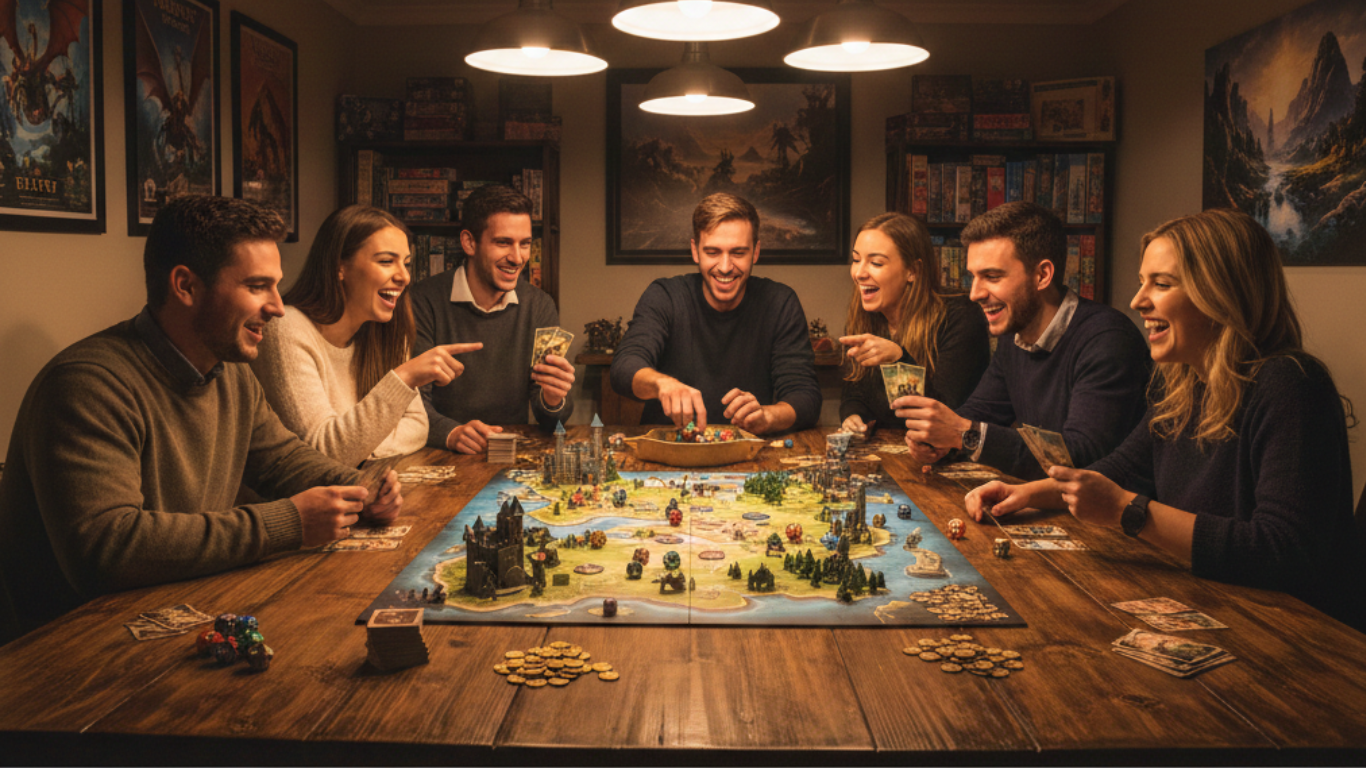
What they share: both require genuine strategic thinking, both create social moments you actually remember, both can keep groups entertained for years. A good board game or card game becomes a ritual—something people ask for by name.
How Board and Card Games Boost Brain and Bonding

Cognitive and Educational Benefits:
Board games and card games both act as powerful tools for brain development and cognitive enhancement.
-
Strategic thinking: Games like Chess, Catan, Scythe and War of Atraxia require players to think multiple moves ahead and adapt to changing situations, developing analytical skills.
-
Memory improvement: Remembering rules, opponent strategies, card counts and game states strengthens both short‑term and long‑term memory.
-
Problem‑solving: Players constantly face new challenges that demand creative solutions and adaptive thinking.
-
Pattern recognition: Many card games reward spotting numerical or suit‑based patterns, which sharpens analytical skills.
-
Mental flexibility: Adapting strategy after every draw or board change trains cognitive flexibility and better decision‑making.
Social, Emotional and Practical Benefits:
Board and card games also offer strong social, emotional, and lifestyle advantages.
-
Teamwork and cooperation: Cooperative titles—whether large board games or compact co‑op card games—teach collaboration, listening and shared planning.
-
Emotional regulation: Learning to handle both victories and defeats gracefully builds resilience and sportsmanship.
-
Communication skills: Negotiation, explanation and in‑game discussion naturally improve verbal expression and active listening.
-
Reduced stress: Engaging gameplay creates mental breaks and releases tension through shared laughter and focus.
For families, the benefits are even more visible:
-
Multi‑generational appeal: Games like Biomes of Nilgiris and other accessible strategy titles can include kids, parents and grandparents at the same table.
-
Screen‑free entertainment: Both formats provide a structured alternative to digital devices and encourage face‑to‑face interaction.
-
Shared experiences: Collaborative and competitive moments turn into stories families and friends remember and talk about for years.
On the practical side, card‑driven designs add extra flexibility:
-
Portability and setup: A deck‑based game is easy to carry, quick to teach and can be played on small tables, café corners or even travel trays.
-
Budget‑friendly entry: Many great card games cost significantly less than big box board games, making them accessible starting points for new players.
Popular Titles in Each Category
In board games, Settlers of Catan defined the category—resource trading, negotiation, and the foundation of modern strategy gaming. Ticket to Ride proved that route-building could carry an entire game and keep playing appeal consistent across 15 years. Codenames bridged word games and team strategy, creating something that works for hardcore gamers and families equally.
In card games, Exploding Kittens brought modern party card gaming into the mainstream through speed, humor, and genuinely tense moments. Magic: The Gathering built a deck-building framework so solid it's still the category standard after 30 years. Trading card games in general have become lifestyle hobbies with organized competitive scenes.
But here's the reality of 2025: the best new titles are hybrids or fresh takes. Games combining proven mechanics with completely new themes. Natural and educational settings replacing fantasy defaults. Designers are building for families and diverse player groups.
How to Choose the Right Game for Your Group
Instead of overthinking “board game vs card game”, match three things: time, people, and purpose.
1) Match the game to your available time
-
5–20 minutes → Filler & quick party games
Perfect while you wait for food, between longer games, or to close the evening.
Example: Exploding Kittens – fast turns, simple rules, big laughs in under 15 minutes. -
20–40 minutes → Gateway / light strategy games
Ideal when you want real decisions without heavy rules. Great for newer players or weeknights.
Example: Malagasy – a light strategy game that introduces planning and tactical thinking without overwhelming the table. -
40–90 minutes → Medium strategy games
Best when your group is ready for a “proper” session with more depth and combos.
Example: Biomes of Nilgiris – a nature‑themed strategy game where players build and balance ecosystems, perfect for families and hobby gamers. -
90–180 minutes → Heavy strategy games
These are “event” games for serious game nights with players who enjoy long rules explanations and deep decisions.
Example: War of Atrazia – a conflict‑driven strategy board game with asymmetric powers and long‑term planning, ideal for hardcore gamers. -
Variable time → Party / co‑op games
When people may join or leave, or you aren’t sure how long you’ll play, flexible games are safest.
Example: Monkey n Thieves – a lively, highly interactive game that works with changing player counts and can be stopped between rounds.
2) Check who’s actually playing
-
Two or three hardcore gamers?
Go for strategy‑heavy titles like War of Atrazia or competitive card games. -
Family with kids (around 8–14)?
Choose accessible strategy games like Biomes of Nilgiris that adults enjoy but kids can still learn quickly. -
Office group or party crowd?
Fast party card games and light filler games keep energy high and rules overhead low.
Different groups need different formats—force‑fitting the wrong game is the easiest way to kill a game night.
3) Be clear about the goal
-
Pure fun and laughter? Pick party card games or chaotic fillers.
-
Teaching strategy and thinking skills? Use medium strategy board games that reward planning.
-
Building a long‑term hobby or collection? Look at trading card games and heavier strategy titles.
-
Strengthening relationships with your closest people? Either format works—just choose something everyone is comfortable learning and replaying.
In practice, most players end up with both: card games for frequent casual play and board games for dedicated game nights. It isn’t either‑or; it’s about choosing the right tool for your time, your group, and your occasion.
Conclusion
Board games create committed experiences with lasting strategic depth and memories. Card games deliver accessible fun, portability, and social connection in compressed timeframes. Neither is objectively better—they serve different purposes.
The 2025 gaming renaissance exists because both formats work. People want alternatives to screens. They want actual interaction. They want entertainment that rewards strategy, memory, and social skill. Both board games and card games deliver exactly that.
Pick based on your actual life. Respect the format you choose. Gather people around it. You'll be amazed how quickly it becomes a ritual people ask for by name.


